Showing posts with label permaculture garden. Show all posts

Monday, March 31, 2014

Healthy Biosphere Today: Wild Rose Hip Tea (Rosa Canina)


Dog Rose Hips
Dog Rose Hips March 31, 2014
Long, cold winters take their toll on your energy and healthy immune system. Rose hip tea, high in natural and pleasant tasting vitamin C, is a powerful antioxidant.  Instead of taking a manufactured supplement, try this easily absorbable refreshment from nature. 

Tea made from dog rose hips  has a mild, pleasant orange flavor derived from the deep reddish-orange, semi transparent skin.

Dog rose hips are elongated and naturally shiny. They tend to hang in clusters of five on the bush, and hang until early Spring.
The hips contain many seeds and have tiny hairs inside that are best strained out of the rose hip tea. Fresh dog rose hips can be washed, sliced open to remove the seeds and rinsed to remove the small hairs inside the hip.  The result is a tangy sweet natural fruit leather, also suitable for baking.
Many  boosting concoctions can be derived from rose hips including immune syrup, jelly, and rose hip soup to name a few.

For colder climates, these rose hips can provide more vitamin c per serving than an orange, and were used as a vitamin C supplement during WWII.  Frost improves flavor. Mormon pioneers recorded that the Northwestern Shoshone consumed rose flowers, hips and also made rose hip teas.  (Source:
http://www.historytogo.utah.gov/people/ethnic_cultures/the_history_of_utahs_american_indians/chapter2.html)

Dried Wild Rose Hips
The Dog Rose grows tall and creates a natural barrier and wild life sanctuary.  The blooms are old rose style and either white or light pink in color.  Dog Rose can be a welcome addition to your permaculture garden!

For preppers, vitamin C has a very positive effect for eradicating radiation from the body.
Harvard Medical School indicated: "Our experiment showed that vitamin C can prevent damage from radiation...it somehow keeps the radiation from killing the cells."
Try some wild rose hips today, you may find it's your favorite new cup of tea to fight off the winter blues, safely and gently boost the immune system, and naturally replenish antioxidants.


Impenetrable Wild Dog Rose Hedge
Salem, Utah
 March 31. 2014

Tuesday, September 24, 2013

Healthy Biosphere Today: Secret Health and Permaculture Benefits of Chives

Unassuming Chives boast big benefits for permaculture gardens and a healthy diet.
What else can you do with chives besides using them as a healthy, nutrient rich and flavorful potato topping?

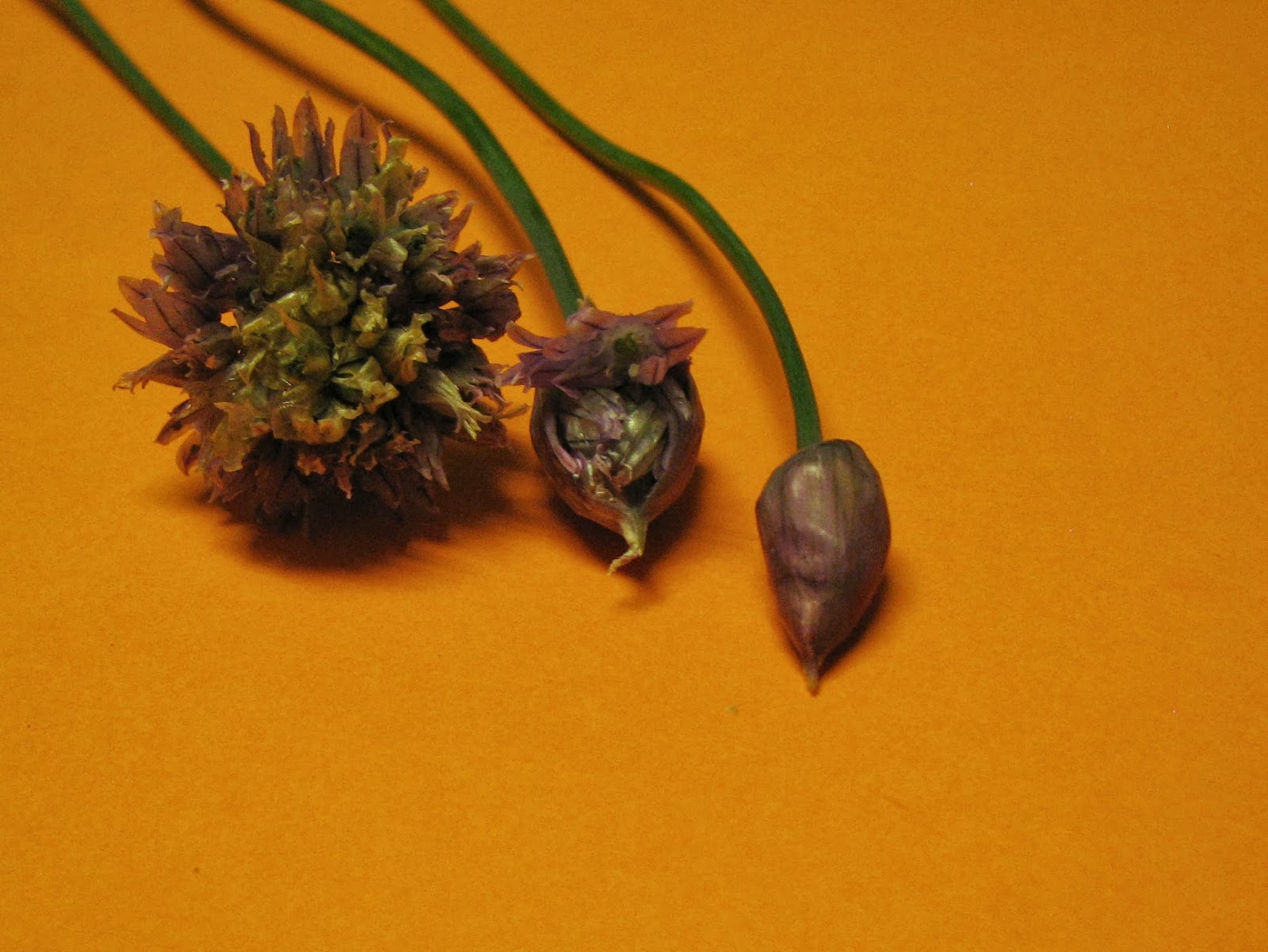
My favorite use for chives is adding young, tender blossoms to salads. I have found several new blooms on my spring blooming chives this fall, giving me the inspiration to write about chives. Chive blossoms deliver onion flavor without all the messy chopping, or adding extra water to a salad. Pick off the chive petal blossoms one by one to separate them.
Purple Chive Blossoms Picked This September Morning.

My grandmother used to give me a delicious meal of  home made cottage cheese topped with chopped chives.  I have never been able to match the fresh taste using store bought cottage cheese.

Garlic chives have white blossoms and  bloom in the fall instead of spring; planting both spring blooming purple chives and fall blooming garlic chives give you fresh blooms and stems spring and fall.  Garlic chives are very popular in Chinese cooking, they add just a hint of garlic. Garlic chives have flat stems, while common purple blossom chives have a round hollow stem.
Chives keep their flavor best when added raw onto foods. Chopped garlic chives will also wilt nicely when added to your favorite stir fry. Young flower buds of the garlic chive are very tender when picked before the blooms open. I can't wait to add garlic chives to the garden this year!

Permaculture gardens benefit several ways from chives. Chives can be used as an insecticide for organic gardening.  Chive tea can be sprayed directly on gooseberries and cucumbers to prevent powdery mildew, on cabbages to repel cabbage butterfly,  and on apple trees to help get rid of apple scab. Plant chives near carrots to discourage the carrot fly, and in rose beds to combat black spot. 
Chives help suppress grass, accumulate nutrients, and attract beneficial insects to the garden with spring and fall blooms. Chive attracts bees- spring and fall!

You can grow common purple chives indoors during the winter, give them as much sun as possible and supplement with grow lights if available. Chives can last well into the winter but are tough after blooming.
Chives grow wonderfully in all kinds of pots, use your imagination and make some interesting displays. Keep chives trimmed after blooming to keep them from becoming long and drooping.

September Purple Chive Blossoms.  These didn't last long!

Healthy Chives: Chives combine to make allicin, which is linked to lowering cholesterol, lowering blood pressure.  Some research shows allicin can help prevent certain types of cancer.
Many use flavorful raw chopped chives as a salt replacement.
Minerals in chives include calcium, copper, iron, magnesium, manganese, phosphorous, potassium, selenium and zinc.  Chives are a source of folic acid, and vitamins A, B6, C and K.


Chives are easy to grow and maintain. Add both common purple and garlic chives to your garden for color, companion planting and natural garden benefits, and healthy flavorful recipes.

Check out this Chinese cookbook by Susanna Foo: Chinese Cuisine: The Fabulous Flavors and Innovative Recipes of North America's Finest Chinese Cook. Houghton Mifflin NY, 1995, 2002.


Thursday, September 19, 2013

Healthy Biosphere: Willow and Mint- Meadows of Change


Willow and Mint
Sweet, savory fall time.
Lush grasses gather their last fullness before the first cutting frost.


Trees soak up the waning full days of sun
And breathe out a sigh of dropping leaves
Leaving their glory swirling down the avenues, in a final tidal wave of color.


Mints hold to their green
And hide themselves
Under derelict grasses
And leaf banks of warmth
Seeking protection from the certain outlash
Of rain and snow and naked winter days. 


Willows bow gracefully to the fall
Before becoming brittle and angry
As the wind tugs away at slender leaves
And steals the summers wealth of soft cloaked coverings
Left drying and reduced on the ground.


The nights deepen, and fall brings an uncanny hush to the field
As the birds are departing
Leaving scattered seeds for spring yield.


Once again the full moon rises and shines on the land
As it signals the creatures to treasure the fall bounty
Before the darkening days give in to winter
And chill scours the earth.
Laura Istas - Sept. 19, 2013


Wednesday, September 18, 2013

Healthy Biosphere Today: On the Menu - Garden Corn Salad

It's wonderful to find a new "old" recipe for your in-season garden produce.  This recipe found while shopping a used book sale at a local thrift store in Orem, Utah.
 

Corn Salad:


3 cups fresh cooked corn
1 large cucumber, peeled and sliced
3 green onions, sliced
2 small tomatoes, chopped
2 T Mayo
3 T Sour Cream
1 T cider vinegar
1/2 t salt
1/4 t dry mustard
1/2 t celery seed
Tomato Cups or Lettuce Leaves
Corn Salad
Credit: "The Natural Nine" Cooking with Whole Grains
Lorraine D. Tyler
1984 Magic Mill

Layer vegetables in large salad bowl.  Combine mayo and sour cream.  Add remaining ingredients, blend well. Toss with vegetables, refrigerate until well chilled.  Serve on lettuce leaves or in hollowed out tomato cups.  Serves 4-6.


Fresh Brandywine - Chop it Up!
 

Improvising Just a Little - Hmm, how about adding some Loveage!
Saving the Heirloom Tomato seeds too. 
Back out to the garden.....
 
Super good and ready to chill.
The Loveage gave it a unique gourmet herb flavor, I used 2 small stalks and leaves. 
Veggie credits: Corn and Cuke from Vineyard Gardens
I used a Utah's Own Wild Coyote Buttermilk Dressing because I don't have Mayo or Sour Cream.
:Home grown tomatoes,onion and loveage. 

Last but not least: Feeding the compost bin.


Friday, September 13, 2013

Healthy Biosphere Today: On the Menu

On the Menu: 
Arugula Thinnings Salad


Arugula is growing quickly this fall after we received record rain here in Utah.
 
I am thinning the Arugula and using the thinnings for salad - the tender young Arugula is extra mild. 
Hoping for some blooms before we have a hard freeze!  However even if it freezes, Arugula is very hardy and will easily winter over in a cold frame, giving you extra early greens and blooms for salad.

Wednesday, September 11, 2013

Permaculture Project: Willow Trellis

Permaculture Garden Project:  Willow Trellis


A perfect fall garden project!  The plan is to collect as many uprights and rungs as needed and make the ladders before gathering benders. The trees in this area have been coppiced and are a wonderful fit for this project. There are also  many variations on a theme: Woven Willow, Mini Fence, Trellis, Arbor, etc.
Here is a great link on how to build willow trellises:

Creating a Willow Trellis - Wis. Public TV

The beginning goal was to cut 24 each willow  - 12 for the ladder uprights, and 12 to cut into the ladder rungs. 
The first trip yielded 10 ladder / rung possiblities all at least 5 ft tall.
Next time out I will also use a small saw and a larger lopper.
These are all a minimum of 2" at the base, before cut to length.

Here is a finished project using Woven Willow from the Mother Earth News:

 
Willow ladder uprights - side branches removed, not cut to size
Besides the valuable link above, here are some illustrations from an old book on building rustic furniture from Smith Book Press, "How to Build Rustic Furniture" 1991. These were a good series although I am not sure if it is still in print. If you can find it, buy it!


Monday, September 9, 2013

Nine - Nine September: Hues of Fall

Nine - Nine September: Hues of Fall

Evening time and instead of picking and transplanting I kept getting distacted by the multi- golden, russet sunset hued in deep smoky colors all around me.  There isn't  just a spot wash of color to the west, it looks like I am living on the coast. It's very distracting and surprising to see the colors reflecting across the windows in all directions. The air is soft, rich and humid from the recent rain.

The diversity of the colors of the sunset, and the fall garden are enlightening and fulfilling. The harsh summer light has given way to a musky rich fall and deepening skies.

Colors of the harvest are mirrored in the colors of the sunset. Look at the colors of harvest and imagine the sunset: orange, gold, reds, burgandy, and opaque clouds with blue breaking through.


Next year: Pumpkins and squash to complete the color array!

The apple trees have been completely neglected, and the only pruning they got this year was to keep them off the ground.  The birds have found a haven here in the large, low branched trees, foraging for insects, shade and cover.


Purslane, dandylion and mallow are growing in to compete with the moonscape of four perennial weeds from pioneer irrigation.


Saturday, August 31, 2013

New Garden Beginnings

Here it is Labor Day weekend! After the first precious soaker rainstorm the garden is beginning to show some strength.  There is a lot of lawn to take out; I have begun gathering wild edible seeds to aid in soil recovery.

I tried to start some fall seeds by direct sowing them in mid-July; that was a epic fail, even though I kept the seeds shaded and moist anything that did germinate withered.  We have had the hottest summer on record, and it continues even now!

Here are some pics of progress, and repurposing what was already here.  I did bring in some garden compost from a landscape supply 2 blocks away for the beds.

 
Collecting Chicory and Mullein Seed
Epic Mushrooms After Rain


Porch seed starting; Kale veggie pots, Egyptian onions taking root


Peaches
Seeded Arugula - will be ready for transplanting soon.


Small Raised Beds / Cold Frame Combo


Transplanted Currants

Veggie Garden